Hotel technology is sold as three things that only work properly together — a property management system, a channel manager and a booking engine — and vendors price them in incompatible ways, which makes comparison harder than it should be.
The three components
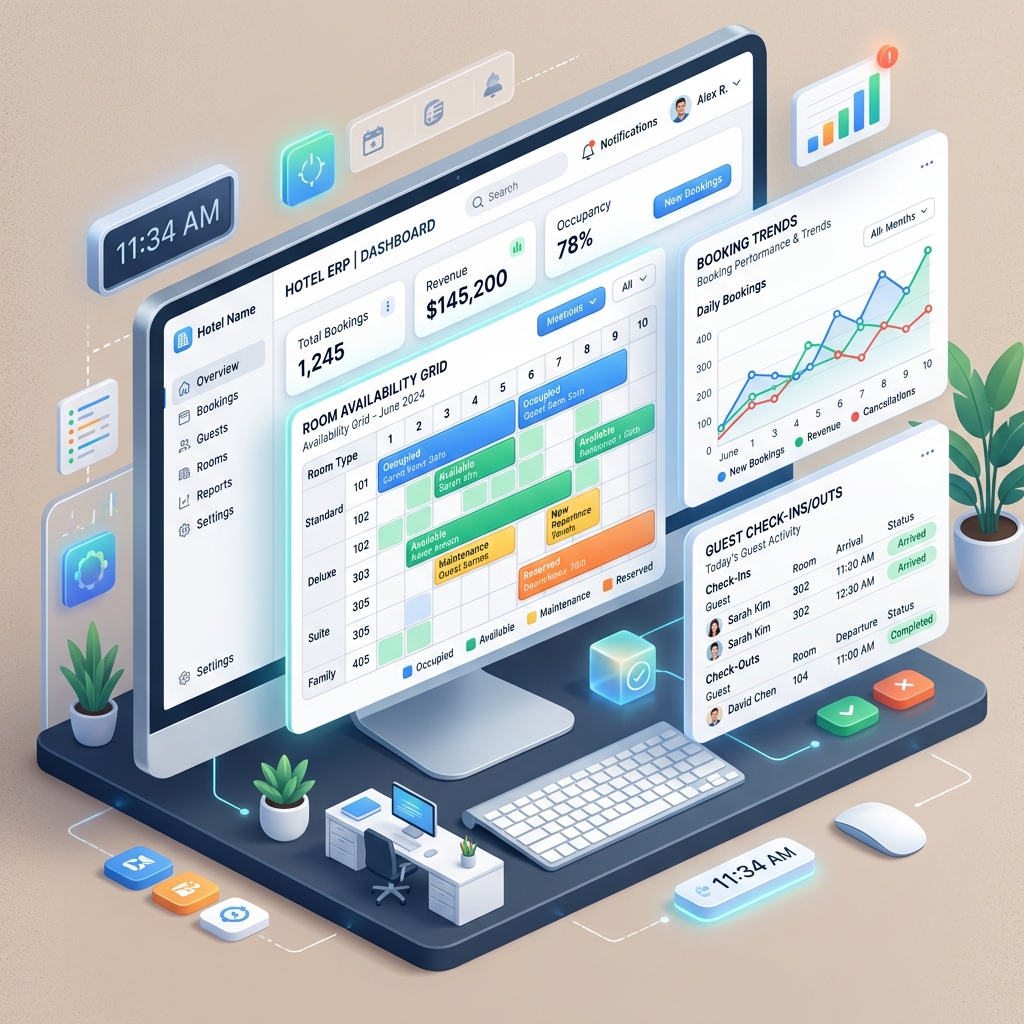
PMS runs the property: reservations, front desk, housekeeping, folios, night audit. Usually priced per room per month, sometimes with a room-count band.
Channel manager keeps inventory and rates synchronised across the booking platforms you sell through. Priced per room, per channel, or flat.
Booking engine takes direct bookings on your own website. Priced flat, or as a commission on bookings it produces.
Some vendors sell all three as one subscription. Others sell the PMS and charge separately for each connection. The second model looks cheaper until you count the channels you actually need.
Per-room pricing and what counts as a room
Per-room is the dominant model, and the definition matters. Does it count total inventory or occupied rooms? Are out-of-order rooms billed? If you operate seasonally, can the count reduce in the off season?
For a property with meaningful seasonality, a vendor who bills on peak inventory year-round is materially more expensive than the monthly figure suggests.
Commission versus subscription on the booking engine
A commission model charges a percentage of direct bookings. Attractive at low volume — you pay when it works — and it becomes the most expensive component as direct business grows, which is the outcome you are working towards.
A flat subscription costs the same regardless. Worse at low volume, better as direct bookings increase.
Work out the crossover point at your realistic direct booking volume. Many properties stay on commission long past the point where a subscription would be cheaper, because the cost is invisible — deducted rather than invoiced.
The comparison that matters is against platform commission, which is substantially higher. Even an expensive booking engine is cheap relative to the commission on the same booking made through a third party.
Costs outside the subscription
- Implementation and data migration, often a significant one-time figure
- Channel connection fees, sometimes per channel, sometimes one-off per connection
- Payment gateway charges, separate from the software
- Hardware — key card encoders, printers, terminals
- Interfaces to door locks, POS, accounting — each frequently chargeable
- Training, and whether refresher training after staff turnover is included
- Support tiers, particularly whether 24-hour support costs extra, which matters for a business that operates overnight
Front desk staff turnover is high in this industry. A vendor charging for every training session will cost more over three years than the subscription difference.
What to compare on
- Total cost over three years, including implementation, for your actual room count and channel list.
- Whether the booking engine model suits your direct volume now and in two years.
- Which channels are supported natively and which need a third party.
- Whether support covers your operating hours, including nights.
- What exporting your data looks like if you leave.
About the author. Kislay Chandan has worked with schools since 2014. Rather than gathering requirements from the outside, he worked inside a school to see what actually goes wrong day to day, and built what he found into the software. He still works with Shemrock Glitters in Patna — most changes to the product start with something that came up there.
Gallery